The weeks after childbirth can feel like a strange mix of exhaustion, relief, excitement and constant adjustment. The baby needs attention almost around the clock, while the mother’s body is quietly recovering from pregnancy and childbirth.
This is where food becomes more than just a way to manage hunger. A good postpartum diet supports tissue healing, helps replenish nutrients lost during pregnancy and delivery, supports energy levels and, when the mother is breastfeeding, helps meet the increased nutritional demands of lactation.
There is no single “perfect” postpartum diet. The right diet depends on the type of delivery, breastfeeding status, appetite, nutritional deficiencies and existing health conditions. The basic principle is simple: eat enough, eat a variety of nutrient-rich foods and give the body time to recover.
Postpartum Nutrition: Why Food Matters After Childbirth
Pregnancy places considerable nutritional demands on the body. Childbirth adds another layer of recovery, particularly when there has been significant blood loss, a perineal injury, or a Caesarean section. The body now needs nutrients for several jobs at once:
- Repairing tissues after delivery
- Supporting wound healing after a C-section or other procedures
- Replenishing iron stores
- Maintaining muscle and energy
- Supporting healthy bowel movements
- Maintaining bone health
- Supporting breastfeeding, when applicable
This does not mean eating large quantities of food or following an elaborate traditional diet. What matters more is the quality and variety of meals.
Protein, iron, calcium, fibre, healthy fats, vitamins and adequate fluids should have a regular place on the plate. For mothers who are breastfeeding, some nutrient requirements increase further, including iodine and choline.
What a Balanced Postpartum Diet Should Include?
A useful way to think about postpartum nutrition is to build meals around a few essential food groups rather than searching for one special “recovery food”.
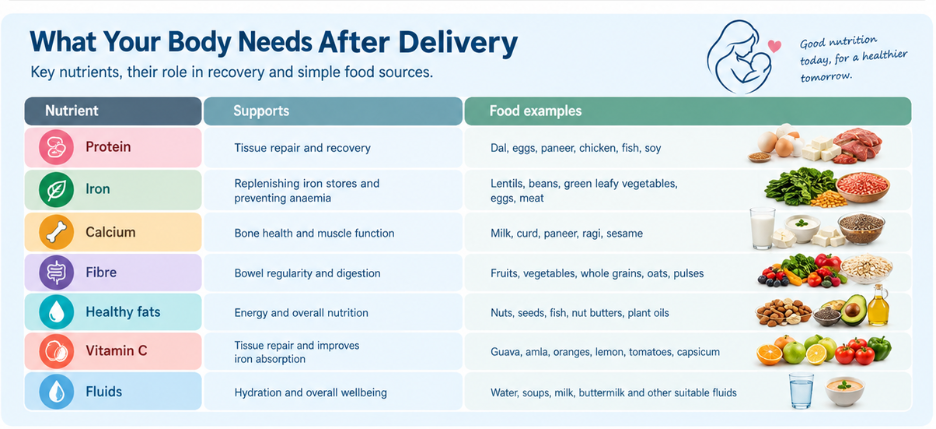
Best Foods to Eat After Delivery for Recovery
Protein-rich Foods
Protein is particularly important during the recovery period because the body is repairing tissues. Dal, rajma, chana, soy, eggs, paneer, curd, fish and lean meats can all contribute.
Vegetarian mothers can get adequate protein by combining pulses, dairy, soy, nuts and seeds across the day.
Iron-rich Foods
Iron deserves special attention after childbirth, particularly if the mother had anaemia during pregnancy or significant blood loss during delivery.
Good options include lentils, beans, green leafy vegetables, eggs and meat. Pairing plant-based iron sources with vitamin C-rich foods such as lemon, guava or amla can help improve iron absorption.
If iron deficiency or anaemia has been diagnosed, food alone may not be enough. Iron supplementation should be taken as advised by the treating doctor.
Calcium and vitamin D sources
Milk, curd, paneer and ragi are practical Indian food choices for calcium. Vitamin D status may also need attention, particularly when dietary intake or sunlight exposure is limited.
Supplementation should be based on individual requirements rather than taking high-dose supplements without medical advice.
Fruits, vegetables and whole grains
Constipation is common after delivery, particularly when activity is reduced or certain medicines are being used. Fibre from vegetables, fruits, whole grains, oats and pulses can help support bowel regularity. Fibre should be increased gradually, especially if the mother is not accustomed to a high-fibre diet. Adequate fluids matter too.
“Feeling tired after childbirth is common, but extreme or persistent fatigue, dizziness, breathlessness or weakness should not always be considered a normal part of recovery. Blood loss during delivery and iron deficiency can contribute to anaemia. If these symptoms persist, a doctor may recommend a haemoglobin test and appropriate iron treatment.”
- Dr. Deepika Aggarwal
Indian Postpartum Diet: Familiar Foods Can Work Well
A postpartum diet does not have to look dramatically different from a healthy Indian family meal. Simple foods often work perfectly well:
- Dal with rice or roti
- Vegetable khichdi
- Dalia or oats with vegetables
- Ragi-based dishes
- Seasonal fruits
- Curd or buttermilk
- Paneer or tofu
- Eggs
- Nuts and seeds
- Vegetable soups
- Fish, chicken, or other lean protein, were included in the diet
Traditional foods such as panjiri, gond laddoo, and ghee are commonly given to new mothers in many Indian households. They can be included if tolerated, but portion size matters. These foods can be energy-dense, and eating large amounts does not automatically make the diet more nutritious.
The goal is not to replace traditional foods. It is to balance them with protein, vegetables, fruits, whole grains and other nutrient-rich foods.
Postpartum Diet Chart for a New Mother
There is no fixed postpartum diet chart that suits every mother. Appetite, breastfeeding, activity, body weight, anaemia, diabetes and other health conditions can all change nutritional requirements. A flexible meal pattern may look like this:
Postpartum Diet for Breastfeeding Mothers
Breastfeeding changes the nutritional picture because the mother is supporting her own recovery while also producing breast milk.
Breastfeeding mothers generally need additional energy compared with their pre-pregnancy intake. The exact requirement varies with factors such as body size, activity, whether breastfeeding is exclusive or combined with formula feeding, and general nutritional status. A breastfeeding mother should focus on:
- Regular, balanced meals
- Adequate protein
- Iron-rich foods
- Calcium and vitamin D sources
- Iodine and choline sources
- Fruits and vegetables
- Whole grains and pulses
- Adequate fluids
Eggs, dairy products, pulses, beans and seafood can contribute iodine and choline. Vegetarian and vegan mothers may need particular attention to nutrients such as vitamin B12, iron, iodine, zinc and omega-3 fats.
“Breastfeeding mothers do not need to follow a special or restrictive diet. What matters most is eating a varied, nutritious diet with adequate energy, protein, fluids and essential nutrients. If there are concerns about milk supply, it is better to speak with a lactation expert or healthcare professional rather than relying on individual foods or traditional remedies.”
- Dr. Deepika Aggarwal
Foods to Avoid or Limit After Delivery
A new mother does not need a long list of foods that are supposedly “forbidden”. For most breastfeeding mothers, a varied diet is encouraged, and there is generally no need to avoid specific foods unless there is a medical reason. However, some choices are worth limiting:
- Excessively fried or greasy foods if they cause digestive discomfort
- Large amounts of added sugar
- Highly processed foods
- Excess caffeine
- Alcohol, particularly during breastfeeding
- Unhygienically prepared or unsafe food
- Fish with high mercury levels
The mother should also avoid tobacco and other addictive substances. There is also no strong reason to eliminate an entire food group simply because it is believed to cause “gas” or weakness unless the mother has a clear intolerance or the treating healthcare professional recommends doing so.
Food After Cesarean Delivery: Supporting Healing
A C-section is major abdominal surgery, so nutrition becomes particularly relevant during recovery. The focus should be on foods that provide enough protein, iron, vitamin C, fibre, and general energy.
For example:
- Eggs, paneer, dal, curd, fish or chicken for protein
- Green vegetables, pulses and other iron-rich foods
- Guava, amla, citrus fruits and vegetables for vitamin C
- Whole grains, fruits and vegetables for fibre
- Water and other suitable fluids for hydration
There is no single “C-section healing food”. Recovery depends on several factors, including the mother’s nutritional status, surgical recovery, wound healing, activity and any complications. If constipation is a concern, increasing fibre and fluids gradually can help. The doctor may also recommend medicines or stool softeners when appropriate.
“After a Caesarean section, the body needs adequate protein, fluids, fibre, iron and other nutrients to support recovery. Instead of focusing on one particular food, mothers should aim for balanced meals and follow their doctor’s advice regarding activity, wound care, medications and follow-up.”
- Dr. Deepika Aggarwal
Special Dietary Considerations After Delivery
Anaemia
Women with low haemoglobin may need additional iron-rich foods and prescribed iron supplementation. Persistent fatigue, dizziness, breathlessness or weakness should not simply be attributed to “normal postpartum tiredness”.
Diabetes
Women with gestational diabetes or existing diabetes may need to continue monitoring blood glucose and structure meals around their individual treatment plan.
Thyroid disorders
Thyroid conditions can affect energy, weight and overall wellbeing after delivery. Medication and nutrition should be managed with medical guidance.
Vegetarian or vegan diet
A well-planned vegetarian diet can meet nutritional needs, but vitamin B12, iron, iodine, zinc, calcium and omega-3 intake may require closer attention.
High blood pressure
Women who had hypertension or pre-eclampsia during pregnancy may need to continue monitoring blood pressure after delivery. A balanced diet with appropriate sodium intake is part of overall care.
Supplements After Delivery: Does Every Mother Need Them?
Some women may need iron, folic acid, vitamin D, calcium, vitamin B12 or other supplements based on their blood tests, diet, pregnancy history and medical condition.
A prenatal supplement should not automatically be continued at the same dose after delivery without checking whether it remains appropriate. At the same time, supplements prescribed for anaemia or another deficiency should not be stopped simply because delivery is over.
The safest approach is to review supplements during the postpartum visit.
Making Postpartum Eating Easier
The biggest problem with healthy eating after childbirth is often not knowing what to eat. It is finding the time and energy to prepare it.
- Keep easy snacks within reach. Roasted chana, fruit, nuts, curd, or boiled eggs are easier to grab than preparing an elaborate meal.
- Prepare basic foods in advance. Cooked dal, chopped vegetables, boiled eggs or homemade snacks can make meals easier on busy days.
- Keep water nearby. Especially while breastfeeding, having a bottle within reach can make it easier to drink regularly.
- Accept help. Family members can help with meal preparation instead of expecting the mother to manage cooking while recovering.
- Do not let traditional restrictions replace nutrition. If a food is nutritious and medically suitable, there is usually no need to eliminate it simply because of a cultural belief.
Article by Dr. Deepika Aggarwal
Chief-Laparoscopic Gynae & Robotic Surgery
Artemis Hospitals

